If you’re looking into piano lessons for kids in Montreal, you’ve probably pictured the usual scene: a nervous kid on a bench, a metronome, scales they don’t want to play.
Piano Lessons for Kids in Montreal: 7 Benefits of Starting at Age 3 or 4
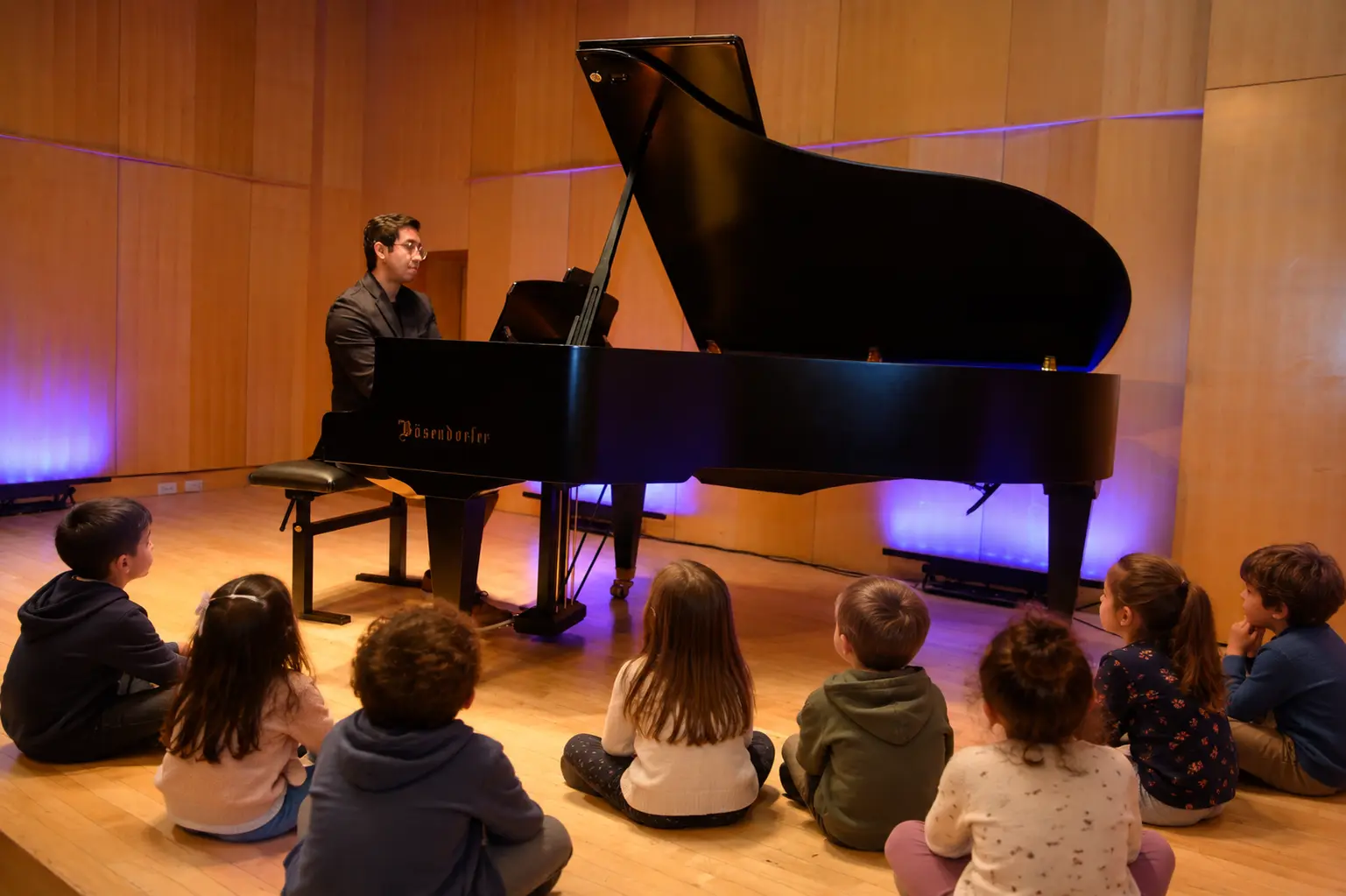
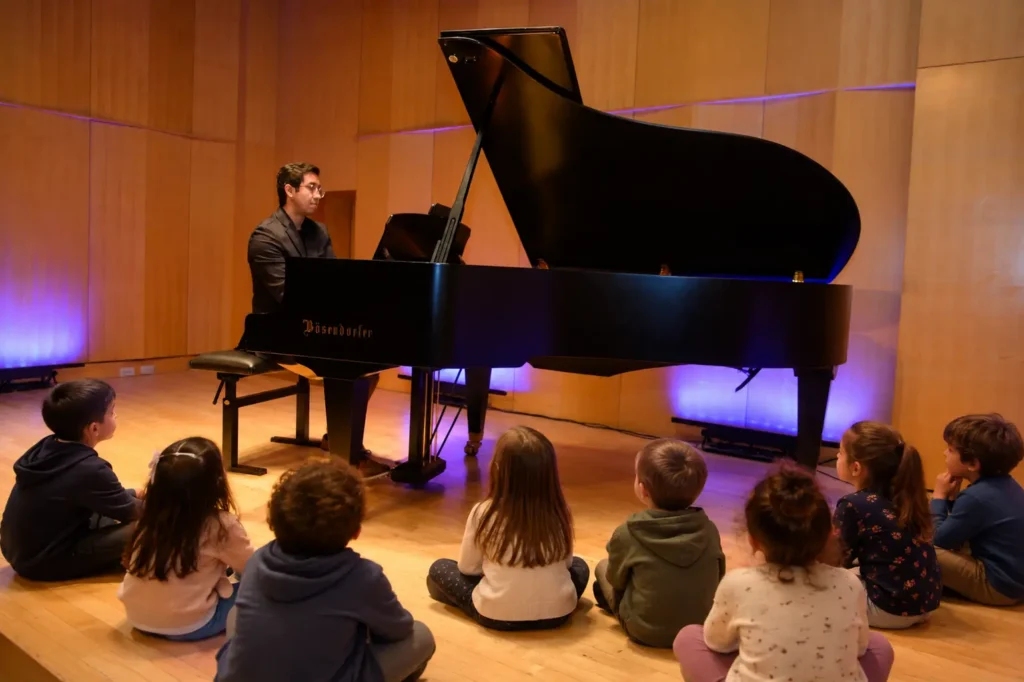
That’s not what this age group needs, and it’s not what a good program looks like at 3 or 4 years old. At BAM Studio, our Music Initiation Class for 3- to 5-year-olds in Notre-Dame-de-Grâce and Côte-des-Neiges skips the bench-and-scales approach entirely and starts with something closer to play. Here’s what actually happens in the room, and why this age is the right one to start.
Book your first free piano class
Why Age 4 to 5 Is a Real Window, Not a Marketing Line
Leonardo Melo, who has taught piano and music initiation classes for kids in Montreal for more than a decade, puts it simply: every kid is a new universe, and music still feels natural to them at this age in a way it stops feeling natural for a lot of adults. Three- and four-year-olds haven’t built up the self-consciousness that makes older beginners freeze up at a keyboard. Rhythm and melody are still as instinctive to them as talking.
The research backs up what that intuition suggests. A well-known study on preschoolers who took private piano keyboard lessons found their spatial-temporal reasoning scores jumped from the 50th percentile to the 85th percentile, a gain that held up on repeat testing months later, according to research summarized by ArtsEdSearch. That’s not a small bump. It’s the kind of result that shows up specifically in this age group and specifically with keyboard instruction, not just “music in general.”
1. It Trains the Ear Before Reading Does
A 3-year-old can’t read yet, but they can absolutely hear the difference between a steady beat and a wobbly one. Piano lessons for little kids start there: clapping, body percussion, call-and-response singing, long before a single note gets read off a page. That ear training becomes the foundation everything else gets built on, whether the child sticks with piano or moves to another instrument later.
2. It Builds Spatial and Logical Reasoning
Pressing the right keys in the right order asks a preschooler’s brain to hold a sequence, track cause and effect, and self-correct in real time. That’s exactly the skill the piano-and-spatial-reasoning research above was measuring, and it’s why “just banging on a keyboard” is doing more cognitive work than it looks like from across the room.
What you’ll notice at home: a kid who’s a little quicker to solve simple puzzles, follow a multi-step request, or spot a pattern in a game.
3. It Gives Preschoolers an Early Language for Emotions
Music gives a 3-year-old a way to express something before they have the vocabulary to explain it, whether that’s excitement, frustration, or just wanting to be loud for a minute. Kids who grow up around structured music-making tend to get better, earlier, at naming what they’re feeling instead of just acting it out. That’s not a small thing at an age when most emotional regulation is still trial and error.
4. It Builds Focus in Bite-Sized Pieces
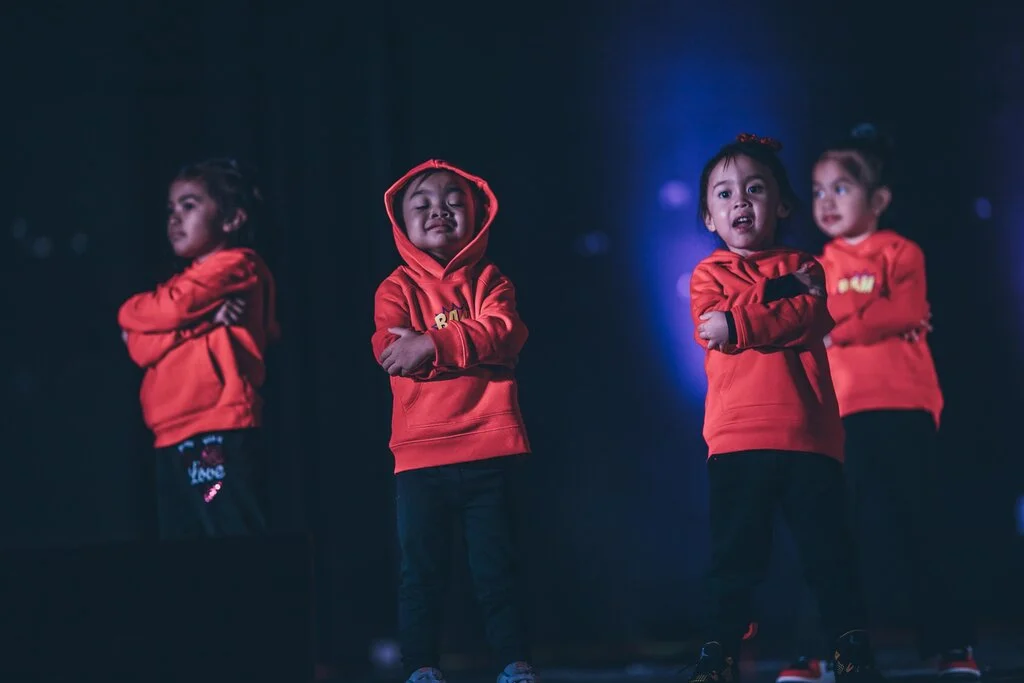
You can’t ask a preschooler to sit and drill scales for 30 minutes, so a real music initiation class doesn’t try. A typical class moves through stretching and physical play, body percussion, group singing, and a short, simple piece the child can sing on their own, each segment landing before attention drifts. Kids leave having practiced sustained focus without ever feeling like they were being asked to.
5. It Teaches Social Skills Through Group Singing and Play
Waiting for a turn, singing in a group, and following a teacher’s cue are skills most 3-year-olds haven’t practiced yet, and a group music class is a low-stakes place to build them. It also normalizes making mistakes in front of other people, which matters more than it sounds like it should. A kid who’s used to fumbling a note in a room full of other kids fumbling notes grows up less afraid of getting things wrong in general.
6. It’s Piano Lessons for Toddlers, Not Piano Practice
There’s a real difference between piano lessons for toddlers and the private, one-on-one lesson format most people picture when they hear “piano lessons.” At this age, the goal isn’t technique drilling or reading sheet music. It’s building comfort with sound, rhythm, and the instrument itself, so that if your child moves into private lessons at 6 or 7, they’re not starting cold.
7. It’s Low-Pressure to Try
Parents often worry their specific kid will clam up in a new room with new people, and that’s a fair worry, not an overreaction. Having a parent in the room for the first few classes is normal, not a sign something’s wrong, and a good teacher treats a clingy first class as the starting point, not a problem to fix. The only real way to know if your child will take to it is to watch them try.
What a Real Piano Lesson for a 3-Year-Old Actually Looks Like
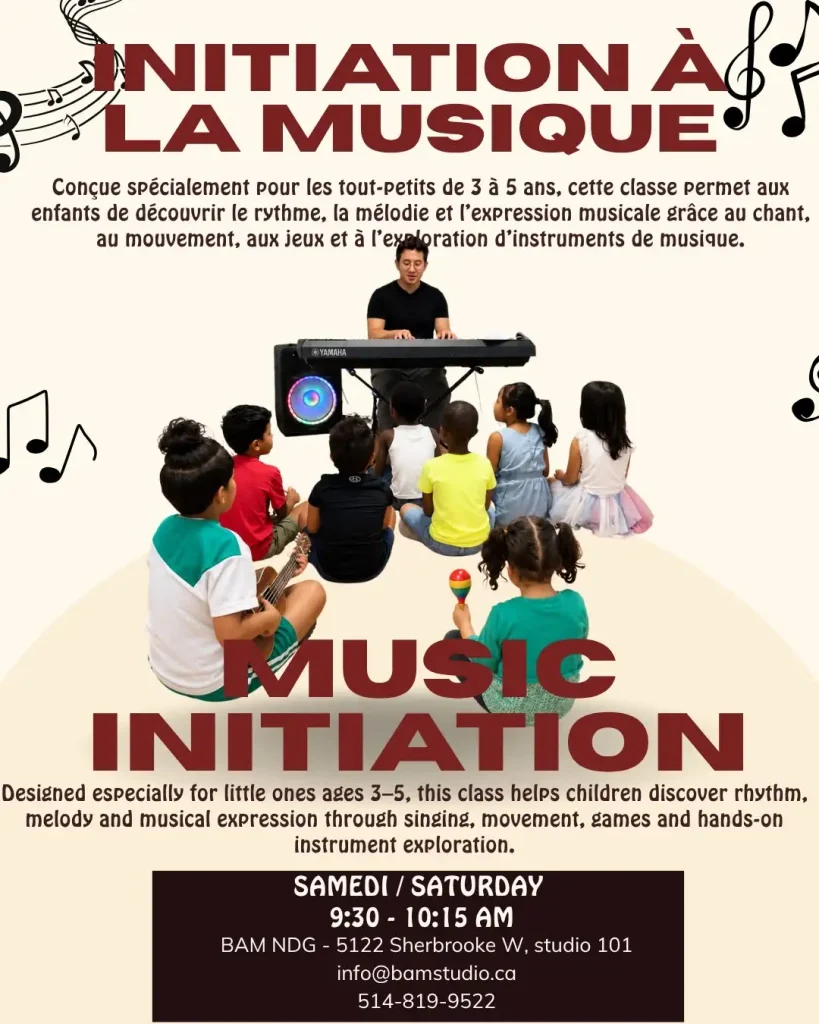
Here’s the honest version, based on how BAM Studio’s own Music Initiation Class actually runs, not the brochure version. Class opens with stretching and physical play, not an instrument in sight, so kids relax before anything “musical” happens. From there it moves into:
Body percussion and clapping to build a feel for rhythm
Leg slaps and finger snaps as an easy entry point before touching a keyboard
Group singing that turns the room into one unit instead of a lineup of individual performers
A simple song by the end of class that a child can sing on their own, without the piano
The teacher’s job in that room is closer to playmate than instructor for the first few weeks. That’s deliberate. Kids open up faster with someone building trust through play than with someone correcting their hand position.
What to Look for in Piano Lessons for Kids in Montreal
Not every “piano lesson” or “music class” labeled for kids is actually built for a 3- or 4-year-old. Before you book, check for:
A group or semi-structured format, not a straight private lesson modeled on adult instruction.
A teacher who has actually worked with toddlers, since the skill set for keeping a room of 3-year-olds engaged is different from teaching an older beginner.
A trial class, so you can watch your child’s actual reaction instead of guessing from a class description.
Realistic class length. 45 minutes is close to the ceiling at this age.
A location that fits your week, whether that means NDG, Côte-des-Neiges, or wherever else you’re already driving.
For a fuller look at how BAM Studio structures classes by age, our music program page breaks down the Music Initiation Class, private piano lessons, and voice lessons side by side.
Try a Free Music Initiation Class at BAM Studio
BAM Studio runs its Music Initiation Class for 3- to 5-year-olds on Saturday mornings at both the NDG and Côte-des-Neiges studios, taught by Leonardo Melo. Each session is 45 minutes and built around singing, movement, and instrument exploration rather than technique drills, with private piano lessons available separately for kids who are ready for one-on-one instruction.
Every child’s first class is completely free, no commitment and no pressure to perform, just a chance to see how your child responds to the room. If you’re comparing piano lessons for kids in Montreal and want an honest read on whether your 3- or 4-year-old will take to it, that’s the fastest way to find out. Reach out through our contact page to book a free trial class at either location.
Common Questions From Montreal Parents
What age should my child start piano?
Three is early enough to build real comfort with rhythm and sound before self-consciousness sets in, and BAM’s Music Initiation Class runs from age 3 through 5 for exactly that reason.
Do 3-year-olds actually learn piano, or is it just games?
Both. The games are how a 3-year-old learns rhythm, listening, and coordination, the same foundation a private piano student builds on later. It looks like play because that’s the format that actually works at this age.
My child is shy. Will a group music class be too much?
Clinging to a parent in the first class is normal, not a red flag. Most kids warm up over a few sessions once the teacher and the room become familiar, and having a parent present early on is expected, not discouraged.
How much do piano lessons for kids cost in Montreal?
Pricing varies by studio and format. At BAM Studio, families enrolling a second child get a sibling discount, and combining music with another activity, like ballet or karate, brings a multi-class discount too.
Spots fill up, especially before fall enrolment, so don’t wait. One free class could be the thing that changes your kid’s life, or at least their and your Saturday mornings.
Whether your little one wants to play music, your teen wants to groove, or YOU need to get moving… We have something for everyone!